
Curious about what are HIPAA social media rules? Discover how to stay compliant, protect patients, and grow your practice online.
A nurse takes a selfie at work, and accidentally reveals a patient’s medical chart in the background.
Patient trust isn’t something to gamble with on social media, even if that perfect hospital corridor shot would rake in the followers.
Doctors, nurses, and medical staff can’t just throw pics up on Facebook or Instagram without thinking twice.
And yeah, HIPAA might not have specific rules about TikTok, but those privacy standards still stick.
Because at the end of the day, it’s not about the perfect post. It’s about keeping promises to patients who trust their caregivers with their most personal information.
Key Takeaways
- Listen up, posting a patient’s private details on social media without their clear okay isn’t just wrong, it’s asking for serious trouble.
- Any medical group worth their salt needs ironclad rules about what staff can and can’t share online, ’cause HIPAA violations don’t play around.
- Trust me, nobody wants to deal with those massive fines or watch their reputation go up in smoke when word gets out they couldn’t keep patient info under wraps.
What Are HIPAA Social Media Rules
Remember when hospitals just sent out those boring paper newsletters? Now doctors and clinics blast health tips to thousands with a single tweet.
It’s wild how social media’s transformed healthcare communication, from sharing quick flu shot reminders to showing off the latest robotic surgery tech. But there’s a catch that keeps hospital PR teams up at night: one careless post could destroy years of patient trust.
Sure, HIPAA’s been around since before Mark Zuckerberg was in high school, but those privacy rules hit differently when every nurse carries a camera in their pocket.
Some days it feels impossible, right? Trying to be engaging online while tiptoeing through a minefield of privacy concerns.
But that’s exactly why we need to get real about these rules, ’cause one slip-up on social media could mean game over. [1]
No Posting of PHI on Social Media Platforms
First rule of healthcare social media? Keep patient info off your feed unless they’ve signed off on it.
Like, actually signed, not just a verbal “yeah, sure.” And this private stuff goes way deeper than you’d think:
- Those “cute” patient pics (face stickers don’t cut it)
- Dropping hints about someone’s treatment
- Tagging yourself at that specialized clinic
- Surgery dates, even vague ones
- Any location details that could ID someone
Man, it’s crazy how the smallest stuff can give away someone’s identity. You know that break room selfie where there’s just a tiny corner of a patient file peeking out?
The one that looked perfect with that Valencia filter? Boom, HIPAA violation right there. Accident or not, doesn’t matter, you can’t take back a privacy breach.
So unless you’ve got ironclad permission in writing, just keep patients out of your social game entirely. Not worth the risk, especially when navigating the complexities of effective social media marketing for healthcare that requires balancing engagement with strict privacy.
HIPAA Privacy Rule Application to Social Media Use
Think of HIPAA’s Privacy Rule as a shield that guards patient secrets. Back when they wrote these rules, Facebook wasn’t even a thing.
But the rules are pretty clear, keep patient info private, no matter where it shows up. What does this mean for healthcare folks? Simple stuff:
- Keep patient details under wraps (whether it’s in old paper files or today’s tweets)
- Watch out for anything that might give away who’s who
- Don’t share unless the patient says it’s okay (in writing!)
Doctors and nurses need to be just as careful with their social posts as they are with paper charts. Same rules, different tech.
This is why understanding the social media platforms for healthcare helps staff know where sensitive info should never appear.
Before hitting “post,” they’ve gotta stop and think: would this give away someone’s private info? ‘Cause once it’s out there, you can’t take it back.
Healthcare Organizations’ Social Media Policies for HIPAA Compliance
Every hospital and clinic needs rules about social media, written down, clear as day. No guessing games about what’s okay to post.
Here’s what these rules usually cover:
- No sharing patient stuff unless they say it’s cool (and sign for it)
- How to keep your work posts separate from your personal life online
- Who needs to okay posts that go on the official accounts
- What to do if someone messes up and shares something they shouldn’t
- The right way to share patient success stories
It’s like having a roadmap, everyone knows where they can and can’t go online. Plus, it shows the higher-ups aren’t messing around when it comes to keeping patient info private.
Makes life easier for everyone, really. No one wants to be that person who got their whole department in trouble over a tweet.
Workforce Conduct Guidelines for Social Media Under HIPAA
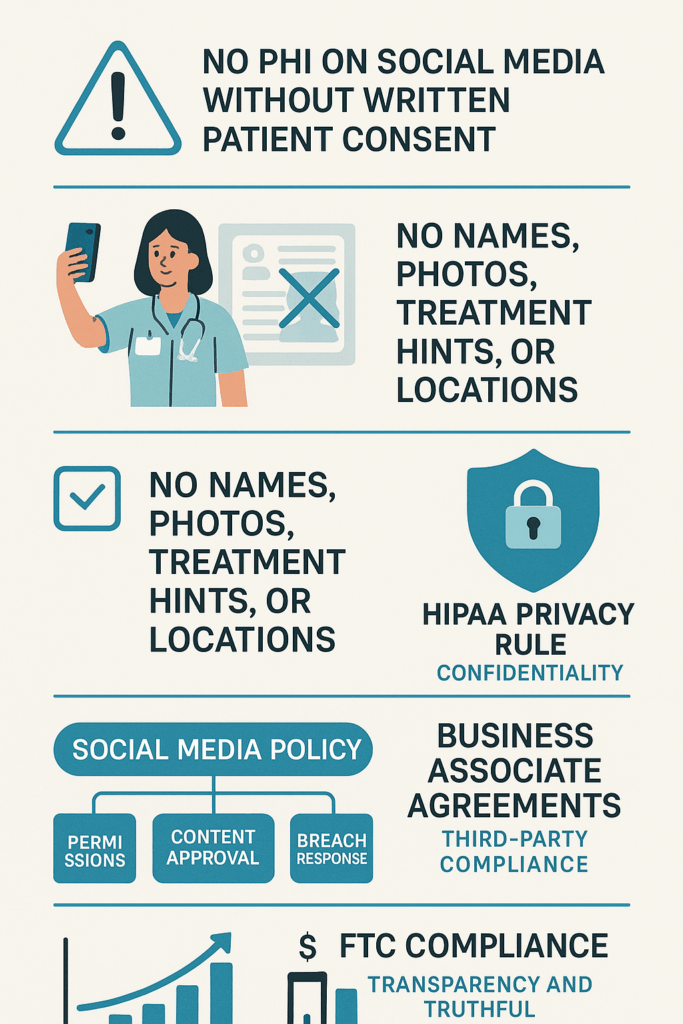
What your hospital staff does online matters, big time. That’s why everyone needs regular reminders about the do’s and don’ts of social media.
It’s not rocket science, but it’s super important. Here’s the stuff everyone needs to know:
- Don’t post about patients anywhere, not on your work account, not on your personal Instagram, nowhere (unless they’ve signed off on it)
- Keep patient talk offline – no chatting about cases in Facebook groups or online forums
- If you see something wrong, say something right away
- Know what happens if you break the rules (spoiler: nothing good)
People mess up sometimes ’cause they don’t know better. Maybe they didn’t realize that an innocent-looking post could cause trouble.
That’s why bosses keep drilling these rules home, better to be annoying about it than sorry later.
Patient Consent Requirements for Sharing Information on Social Media
Want to share a cool patient success story? Maybe someone who beat cancer or walked again after a bad accident? That’s awesome, but pump the brakes before you post.
You gotta get everything in writing first. The patient needs to know exactly:
- What you’re gonna share about them
- Which social media sites it’ll show up on
- How you plan to use their story
No shortcuts here, a quick “yeah, sure” from the patient isn’t enough. You need real paperwork that spells everything out.
It keeps everyone safe, the patient and you. Without that signed paper, posting anything about a patient (even if you think it’s harmless) is a big no-no.
Best Practices for Social Media Use in Healthcare Settings
Credits: McMaster University Health Sciences
Want to keep your healthcare social media safe? Here’s what works:
- Keep work and fun separate, your personal TikTok doesn’t need hospital stuff
- Double-check official posts, get someone else to look for patient info before hitting send
- Learn the rules (again and again), yeah, those boring trainings matter
- Watch what everyone’s posting, catch problems before they blow up
- Share less, not more, if you don’t need to say it, don’t
- Add those little reminders, let folks know your posts aren’t doctor’s orders
Think of it like wearing a mask at work, it’s just part of the job. When everyone follows these rules, patients trust us more. And that’s what really matters, right?
For the docs and nurses reading this: make these habits stick. Sure, it’s extra work, but it beats dealing with angry patients or legal trouble later.
Penalties for Unauthorized PHI Disclosure via Social Media
Breaking patient privacy rules on social media? That’s gonna hurt, your wallet and maybe your whole career.
The government doesn’t play around with this stuff. Here’s what can happen:
- Money-wise? You’re looking at fines from $100 up to $50,000 each time you mess up. Do it enough times, and you could be on the hook for $1.5 million in just one year
- Legal trouble? Yep, we’re talking courtrooms and lawyers if it’s bad enough
- Your reputation? Toast. Good luck getting patients to trust you after that
- Your job? Gone. Maybe even your medical license too.
Tracking your impact carefully is crucial, and clinics that fail to measure their social media ROI for hospitals risk not only compliance but business failure.
No tweet or Facebook post is worth all that. And hospitals know it, that’s why they come down hard on anyone who shares stuff they shouldn’t.
One wrong post could wreck everything you’ve worked for.
Business Associate Agreements and Third-Party Compliance in Social Media
HIPAA rules don’t only apply to healthcare providers but also to their business associates, vendors or contractors who handle PHI.
This includes third parties involved in social media marketing or management. To ensure compliance:
- Organizations should have Business Associate Agreements (BAAs) with all third parties managing PHI.
- Third parties must follow HIPAA regulations just like internal staff.
- Clear guidelines and oversight are essential to prevent leaks or unauthorized sharing.
These agreements protect patient data even when handled outside the core healthcare team.
Intersection of HIPAA and FTC Rules in Healthcare Social Media Advertising
Beyond HIPAA, healthcare providers must consider the Federal Trade Commission (FTC) regulations when advertising on social media. The FTC focuses on:
- Transparency about endorsements and paid promotions
- Prohibition of deceptive or misleading claims
- Proper disclosure of relationships and sponsorships
These rules complement HIPAA by ensuring honesty and fairness in healthcare marketing on social media. Providers should align their campaigns with both HIPAA privacy rules and FTC guidelines to stay compliant and trustworthy. [2]
Conclusion
Protecting patient privacy in the age of social media is no small task. Healthcare providers and their teams must be vigilant about what they share online, always following HIPAA’s privacy standards.
If you want expert help navigating HIPAA social media rules and growing your healthcare practice safely, consider partnering with Healing Pixel.
Visit Healing Pixel to learn how we can support your practice’s digital growth while keeping compliance front and center.
FAQ
What are the basic rules for healthcare workers posting on social media?
Think of HIPAA rules like a strict parent watching what you share online. You can’t post anything about patients, no names, no pics, no stories about their health, unless they give you written permission first.
Even something that seems innocent, like a workplace selfie, could accidentally show private info in the background.
What counts as private patient info on social media?
Pretty much anything that could tell people who a patient is. That’s stuff like their face in photos, their medical problems, when they came to see you, or where they live.
Even little details can add up to reveal someone’s identity. Better safe than sorry, if it’s about a patient, don’t post it.
What mistakes do healthcare workers usually make on social media?
The biggest oops? Taking pics at work without checking the background for patient info. Or getting excited about helping someone and sharing their story without asking first.
That’s why hospitals have strict rules about posts, they help stop these accidents before they happen.
Why do we need patient permission for social media posts?
It’s like asking before taking someone’s picture, it’s just right. But in healthcare, you need more than just a “yeah, go ahead.”
You need actual paperwork signed by the patient saying it’s okay. Good training helps staff remember these rules and understand why they matter.
What happens if someone breaks these rules?
Big trouble, that’s what. We’re talking fines that could buy a house (or several), people losing their jobs, and hospitals getting a bad name.
That’s why most places keep a close eye on what their staff posts online, one wrong tweet could cost everyone big time.
References
- https://www.ncbi.nlm.nih.gov/books/NBK500019/
- https://pmc.ncbi.nlm.nih.gov/articles/PMC10569390/